
In today’s competitive landscape, understanding and leveraging brand equity is paramount for sustained success. Brand equity management tools offer a powerful arsenal for businesses aiming to build, protect, and enhance their brand value. These sophisticated platforms provide the insights and capabilities needed to navigate the complexities of brand management, ultimately driving growth and profitability.
This guide delves into the world of brand equity management tools, exploring their core functionalities, implementation strategies, and the crucial role they play in shaping a successful brand narrative. We’ll examine various tools, compare their features, and discuss how to measure their impact, ultimately empowering you to make informed decisions about optimizing your brand’s potential.
Defining Brand Equity Management Tools
Brand equity management tools are software solutions designed to help businesses understand, track, and improve their brand’s value. These tools provide a comprehensive view of brand performance across various touchpoints, enabling data-driven decision-making to enhance brand perception and ultimately, profitability. They move beyond simple brand monitoring to offer strategic insights and actionable recommendations for growth.Brand equity management tools offer a range of core functionalities.
These typically include brand performance monitoring, which involves tracking key metrics such as brand awareness, customer satisfaction, and market share. Many tools also incorporate social listening capabilities, allowing businesses to understand consumer sentiment and identify potential brand threats or opportunities. Advanced tools often provide predictive analytics, forecasting future brand performance based on current trends and market conditions.
Finally, these tools frequently integrate with other marketing and sales platforms, offering a holistic view of brand performance within the broader business context.
Types of Brand Equity Management Tools
The market offers a diverse range of brand equity management tools, catering to businesses of all sizes and industries. These tools can be broadly categorized based on their functionality and target audience. Some focus primarily on social listening and sentiment analysis, while others emphasize quantitative data analysis and predictive modeling. Certain tools are designed for large enterprises with complex brand portfolios, while others cater to small and medium-sized businesses (SMBs) with more streamlined needs.
The choice of tool often depends on specific business requirements, budget, and technical expertise.
Comparison of Brand Equity Management Tools
The following table compares four hypothetical brand equity management tools, highlighting their key features and pricing models. Note that these are illustrative examples and specific features and pricing may vary depending on the provider and chosen plan.
| Tool Name | Key Features | Pricing Model | Target Audience |
|---|---|---|---|
| BrandView Pro | Comprehensive social listening, sentiment analysis, competitor benchmarking, predictive analytics, custom dashboards. | Subscription-based, tiered pricing (starting at $5000/month) | Large enterprises with complex brand portfolios. |
| BrandPulse | Social listening, basic sentiment analysis, brand awareness tracking, reporting and analytics. | Subscription-based, tiered pricing (starting at $500/month) | Small and medium-sized businesses. |
| BrandMetrics | Advanced data analytics, market research integration, brand performance forecasting, custom reporting. | Subscription-based, enterprise-level pricing (custom quotes) | Large enterprises with sophisticated data analysis needs. |
| BrandTrack | Basic brand monitoring, social media tracking, alert system, simple reporting. | Subscription-based, flat rate ($200/month) | Small businesses with limited budget and technical expertise. |
Key Features of Effective Brand Equity Management Tools
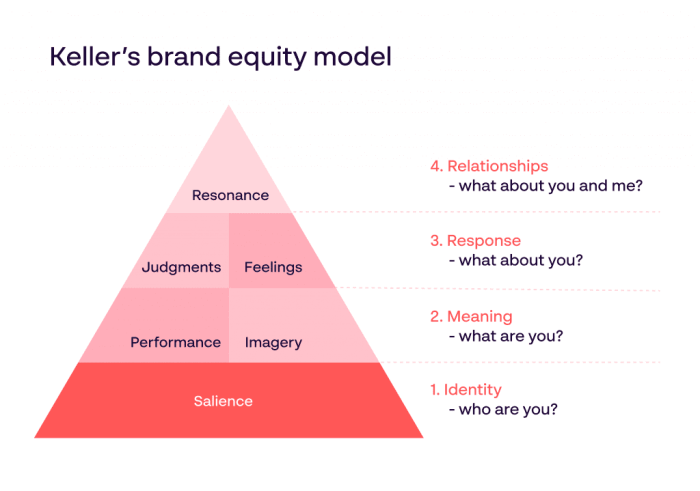
Effective brand equity management tools are crucial for businesses aiming to understand and leverage their brand value. These tools go beyond simple brand monitoring; they provide a holistic view of brand performance, enabling data-driven decision-making and strategic adjustments to enhance brand equity. The right tools offer a combination of features that allow for comprehensive brand analysis and management.
A truly effective brand equity management tool must offer a powerful blend of data collection, analysis, and actionable insights. It should integrate various data sources, provide sophisticated analytics capabilities, and offer clear visualizations to simplify complex information. Furthermore, these tools should facilitate proactive brand monitoring and reputation management, ultimately leading to improved customer experience and increased brand loyalty.
Data Integration and Analytics Capabilities
Data integration is paramount. Effective tools seamlessly integrate data from various sources, including social media, customer relationship management (CRM) systems, market research surveys, and sales data. This holistic view allows for a more comprehensive understanding of brand perception and performance. Analytics capabilities then transform this raw data into actionable insights. For instance, sentiment analysis can gauge customer opinions about the brand across various platforms, while predictive analytics can forecast future brand performance based on current trends.
This allows businesses to identify areas for improvement and proactively address potential issues. A tool lacking robust data integration and analytics capabilities will provide only a fragmented and incomplete picture of brand equity.
Brand Monitoring and Reputation Management
These tools are indispensable for real-time brand monitoring and reputation management. They track brand mentions across various online channels, identifying both positive and negative feedback. This allows businesses to quickly respond to crises, address customer concerns, and proactively manage their online reputation. For example, a tool might alert a company to a negative trend in social media sentiment regarding a specific product, allowing them to immediately launch a targeted communication campaign to mitigate the damage.
This proactive approach is far more effective than reactive damage control.
Improving Customer Experience and Loyalty
By providing a comprehensive understanding of customer sentiment and preferences, brand equity management tools directly contribute to enhanced customer experience and loyalty. Analyzing customer feedback allows businesses to identify pain points in their customer journey and implement improvements. For example, if customer surveys reveal dissatisfaction with a particular aspect of the customer service process, the company can use this data to streamline processes and improve training.
This focus on customer feedback fosters loyalty and strengthens the brand’s relationship with its customers. Ultimately, improved customer experience translates directly into increased brand equity and stronger market position.
Implementing Brand Equity Management Tools
Successfully integrating brand equity management tools requires a strategic and phased approach. A well-defined implementation plan, coupled with thorough employee training, is crucial for maximizing the return on investment and ensuring the tools effectively support brand building efforts.
The process involves careful planning, execution, and ongoing monitoring to ensure the tools align with organizational goals and contribute to a cohesive brand identity.
Step-by-Step Implementation Process
Implementing brand equity management tools effectively requires a structured approach. The following steps provide a roadmap for a successful rollout.
- Needs Assessment and Tool Selection: Begin by identifying specific brand management challenges and selecting tools that directly address those needs. Consider factors such as budget, scalability, and integration with existing systems.
- Data Migration and Integration: Migrate existing brand-related data into the new system. Ensure seamless integration with other relevant platforms, such as CRM or marketing automation tools, to avoid data silos.
- User Access and Permissions: Establish clear user roles and permissions to control access to sensitive brand assets and data. This ensures data security and prevents unauthorized modifications.
- Training and Support: Provide comprehensive training to all relevant employees on how to effectively use the new tools. Offer ongoing support and resources to address any questions or challenges that arise.
- Pilot Program and Refinement: Implement a pilot program with a smaller group of users to test the functionality and identify any areas for improvement before a full-scale rollout.
- Monitoring and Evaluation: Continuously monitor the effectiveness of the tools and make adjustments as needed. Track key metrics to assess the impact on brand equity and identify areas for optimization.
Essential Considerations for Successful Implementation
Several factors contribute to the successful implementation of brand equity management tools. Careful attention to these points will increase the likelihood of achieving desired outcomes.
- Executive Sponsorship: Secure buy-in from senior management to ensure adequate resources and support are allocated to the project.
- Clear Objectives and KPIs: Define clear objectives and key performance indicators (KPIs) to measure the success of the implementation. Examples include improved brand awareness, increased customer loyalty, or enhanced brand consistency.
- Change Management Strategy: Develop a comprehensive change management strategy to address employee resistance and ensure smooth adoption of the new tools. This might involve communication plans, training sessions, and ongoing support.
- Data Security and Privacy: Implement robust data security measures to protect sensitive brand information and ensure compliance with relevant regulations.
- Integration with Existing Systems: Ensure the new tools integrate seamlessly with existing systems to avoid data silos and streamline workflows.
Potential Challenges and Mitigation Strategies
Implementing brand equity management tools can present various challenges. Proactive planning and mitigation strategies are crucial for a smooth implementation.
| Challenge | Mitigation Strategy |
|---|---|
| Resistance to change from employees | Develop a comprehensive change management plan, including communication, training, and ongoing support. Highlight the benefits of the new tools and address employee concerns proactively. |
| Data integration issues | Thoroughly assess existing data systems and plan for data migration and integration early in the process. Consider engaging a data integration specialist if needed. |
| Lack of user adoption | Provide comprehensive training and ongoing support. Make the tools user-friendly and intuitive. Gather regular feedback from users to identify and address any usability issues. |
| Inadequate budget or resources | Develop a detailed budget and secure necessary funding before starting the implementation. Prioritize essential features and consider phased implementation to manage costs. |
Effective Employee Training on Brand Equity Management Tools
Effective training is paramount for successful tool adoption. A multi-faceted approach is recommended.
- Modular Training: Break down training into smaller, manageable modules to improve comprehension and retention.
- Hands-on Workshops: Conduct hands-on workshops to allow employees to practice using the tools in a safe environment.
- Online Resources: Provide access to online resources, such as tutorials, FAQs, and user manuals, for ongoing support.
- Mentorship Program: Pair experienced users with newer users to provide additional support and guidance.
- Regular Feedback Mechanisms: Establish regular feedback mechanisms to gather user feedback and identify areas for improvement in the training program and the tools themselves.
Measuring the ROI of Brand Equity Management Tools
Accurately measuring the return on investment (ROI) of brand equity management tools is crucial for justifying their implementation and ongoing use. While the impact on brand equity isn’t always immediately quantifiable in monetary terms, various methods exist to assess their effectiveness and demonstrate a clear link between tool usage and positive business outcomes. This involves tracking relevant key performance indicators (KPIs), analyzing the data generated, and visualizing the relationship between tool usage and brand equity growth.
Methods for Measuring ROI
Several approaches can be used to gauge the return on investment from brand equity management tools. These methods often involve a combination of qualitative and quantitative data analysis. Financial metrics, such as increased revenue or market share, are often paired with brand perception metrics to paint a complete picture. For instance, improved brand awareness, measured through surveys or social media analytics, can be correlated with a rise in sales figures.
Similarly, enhanced customer satisfaction, reflected in improved Net Promoter Score (NPS), can demonstrate the tool’s contribution to stronger customer relationships and loyalty. A cost-benefit analysis, comparing the investment in the tools against the achieved improvements in brand equity and subsequent financial gains, is also a valuable approach.
Key Performance Indicators (KPIs) for Tracking Effectiveness
Tracking the right KPIs is essential for monitoring the performance of brand equity management tools. These indicators should directly reflect the goals set for the tools’ implementation. Examples of relevant KPIs include:
- Brand Awareness: Measured through surveys, social media monitoring, and website analytics, tracking changes in brand recall and recognition.
- Brand Perception: Assessed using surveys and focus groups, monitoring changes in brand attributes such as trust, quality, and innovation.
- Customer Satisfaction (NPS): Tracking changes in customer loyalty and advocacy through Net Promoter Score surveys.
- Market Share: Monitoring the brand’s position in the market relative to competitors.
- Revenue Growth: Tracking the increase in sales attributed to improved brand equity.
- Website Traffic and Engagement: Analyzing website visits, bounce rate, and time spent on site to assess the effectiveness of brand messaging and online presence.
- Social Media Engagement: Monitoring likes, shares, comments, and mentions to gauge audience response and brand sentiment.
Analyzing Data to Assess Impact on Brand Equity
Data analysis is crucial for understanding the impact of brand equity management tools. This involves comparing pre- and post-implementation data for the chosen KPIs. Statistical methods, such as regression analysis, can help determine the correlation between tool usage and changes in brand equity metrics. For example, by comparing website traffic and brand awareness before and after implementing a new content management system, one can quantify the system’s impact on brand visibility.
Regular monitoring and analysis of data allow for timely adjustments to strategies and maximization of tool effectiveness.
Visual Representation of Tool Usage and Brand Equity Growth
A visual representation can effectively communicate the relationship between tool usage and brand equity growth. Consider a line graph with two lines: one representing the level of tool usage (e.g., number of campaigns run, content pieces created, or features utilized) over time, and another representing the chosen brand equity KPI (e.g., brand awareness score or customer satisfaction). The x-axis would represent time (e.g., months or quarters), while the y-axis would represent the levels of tool usage and the chosen KPI.
Ideally, the lines would show a positive correlation, with increased tool usage corresponding to an upward trend in the brand equity KPI. A clear legend would identify each line, and data points could be labeled for key events or milestones. This visual representation provides a compelling narrative showcasing the positive impact of the brand equity management tools.
Brand Equity, Brand Strategy, and Brand Management
Brand equity, brand strategy, and brand management are intrinsically linked, forming a synergistic relationship crucial for long-term business success. Understanding their interrelation is vital for building and sustaining a powerful brand presence in the marketplace. Effective brand management relies on a well-defined brand strategy, which in turn aims to cultivate strong brand equity. These three elements work in concert, each influencing and supporting the others.Brand equity, brand strategy, and brand management are interdependent components of a successful brand-building process.
A robust brand strategy provides the roadmap for achieving desired brand equity, while effective brand management ensures the strategy’s successful execution and ongoing enhancement of brand equity. Ignoring any one element weakens the overall brand-building process.
The Interplay Between Brand Equity, Brand Strategy, and Brand Management
Brand equity represents the overall value of a brand, encompassing consumer perception, brand loyalty, and the premium consumers are willing to pay. Brand strategy Artikels the specific plans and actions designed to build and protect that equity. This strategy might include target market definition, value proposition articulation, and a detailed communication plan. Brand management, then, is the day-to-day execution of this strategy – encompassing activities such as product development, marketing campaigns, and customer relationship management.
All three elements are essential for a brand to thrive. A strong brand strategy, meticulously executed through effective brand management, directly contributes to increased brand equity.
The Contribution of Brand Strategy to Brand Equity
A well-crafted brand strategy is the foundation upon which strong brand equity is built. It defines the brand’s identity, target audience, and unique value proposition. A clear and consistent brand message delivered across all touchpoints fosters brand recognition and loyalty, leading to increased brand equity. For example, a company with a clear strategy focusing on sustainability will communicate that message across all aspects of their business, from packaging to marketing campaigns, building a strong reputation for environmental responsibility, which directly translates into enhanced brand equity among environmentally conscious consumers.
Similarly, a company focusing on superior product quality will invest in rigorous quality control and communicate that commitment to consumers, fostering trust and ultimately building brand equity.
The Role of Brand Management in Maintaining and Enhancing Brand Equity
Brand management plays a crucial role in translating the brand strategy into tangible results and sustaining brand equity over time. This involves consistent monitoring of brand performance, proactive adaptation to changing market conditions, and continuous improvement of brand messaging and customer experiences. Effective brand management includes crisis management, ensuring that the brand reputation is protected even during challenging situations. For instance, a timely and appropriate response to negative online reviews can mitigate damage and maintain brand equity.
Conversely, a lack of effective brand management can lead to inconsistent messaging, diluted brand identity, and ultimately, erosion of brand equity.
Visual Representation of the Interconnectedness
Imagine a three-circle Venn diagram. Each circle represents one of the three concepts: Brand Equity, Brand Strategy, and Brand Management. The circles significantly overlap, indicating the substantial interconnectedness of the three concepts. The area where all three circles intersect represents the optimal state where a strong brand strategy, effectively managed, results in high brand equity. The overlapping sections demonstrate the synergistic relationship—brand strategy informs brand management, and both contribute directly to building and maintaining brand equity.
The individual sections outside the overlap represent the less effective scenarios where one or more elements are weaker, resulting in suboptimal brand equity.
Case Studies of Successful Brand Equity Management
Effective brand equity management isn’t just about theory; it’s about tangible results. This section examines real-world examples of companies that have successfully leveraged brand equity management tools to achieve significant business growth and enhanced brand perception. By analyzing their strategies, we can glean valuable insights and best practices applicable to a wide range of businesses.
Apple’s Brand Equity Management: A Focus on Experience
Apple’s success is largely attributed to its meticulous brand equity management. They don’t just sell products; they cultivate a holistic brand experience. This involves carefully controlling every aspect of the customer journey, from the design of their retail stores to the intuitive user interface of their devices. Their brand equity management tools likely include sophisticated market research to understand consumer preferences, detailed brand guidelines to maintain consistency across all touchpoints, and robust customer relationship management (CRM) systems to track customer interactions and feedback.
This holistic approach has resulted in unparalleled brand loyalty and premium pricing power. Their consistent messaging, emphasizing innovation, design, and simplicity, has resonated deeply with consumers, leading to a highly valuable and recognizable brand.
Coca-Cola’s Brand Equity Management: Leveraging Nostalgia and Global Reach
Coca-Cola has maintained its position as a global beverage giant through decades of consistent brand equity management. Their strategy relies heavily on emotional connection, leveraging nostalgia and positive associations through effective marketing campaigns. They use a variety of tools, including social media monitoring to understand public perception, extensive market research to identify emerging trends, and a global marketing strategy to ensure consistent messaging across different cultures.
Their ability to adapt to changing consumer preferences while staying true to their core brand values has been key to their long-term success. The iconic Coca-Cola logo and branding are instantly recognizable worldwide, a testament to their effective brand equity management.
Nike’s Brand Equity Management: Connecting with Athletes and Aspirations
Nike’s brand equity management centers on associating its brand with athletic achievement and personal empowerment. They strategically partner with high-profile athletes, creating powerful narratives that resonate with their target audience. Their brand equity management tools encompass sophisticated data analytics to track campaign performance, detailed brand guidelines to ensure consistency across all marketing materials, and a robust social media presence to engage with consumers directly.
This strategy has built a strong emotional connection with consumers, transforming Nike from a sportswear company into a global symbol of athleticism and self-belief. The “Just Do It” slogan exemplifies their effective and concise brand messaging.
Comparison of Approaches
While Apple, Coca-Cola, and Nike employ different strategies, they share common threads in their approach to brand equity management. All three companies invest heavily in market research, maintain stringent brand guidelines, and leverage strong storytelling to build emotional connections with their consumers. However, their specific focus areas differ: Apple emphasizes user experience, Coca-Cola focuses on nostalgia and global reach, and Nike connects with athletic aspirations.
These case studies highlight the importance of tailoring brand equity management strategies to the unique characteristics of each brand and its target audience. The common denominator is a deep understanding of their target market and a consistent commitment to building and maintaining a strong brand identity.
Future Trends in Brand Equity Management Tools
The landscape of brand equity management is rapidly evolving, driven by advancements in technology and shifting consumer behaviors. The tools used to understand, track, and leverage brand equity are becoming increasingly sophisticated, integrating data analytics, artificial intelligence, and real-time feedback mechanisms to provide a more holistic and dynamic view of brand performance. This necessitates a proactive approach to understanding and adapting to these emerging trends to maintain a competitive edge.The integration of artificial intelligence (AI) and machine learning (ML) is fundamentally reshaping brand equity management tools.
These technologies are not merely augmenting existing capabilities; they are creating entirely new possibilities for understanding and influencing brand perception.
Artificial Intelligence and Machine Learning in Brand Equity Management
AI and ML are poised to revolutionize how brands understand and manage their equity. AI-powered tools can analyze vast quantities of unstructured data – from social media conversations and online reviews to customer service interactions and market research reports – to identify emerging trends, pinpoint areas of brand strength and weakness, and predict future consumer behavior with unprecedented accuracy.
Machine learning algorithms can refine these analyses over time, learning from past performance to improve the accuracy and efficiency of brand equity management strategies. For example, an AI-powered system could analyze thousands of social media posts to identify sentiment towards a brand, automatically categorizing them as positive, negative, or neutral, and flagging key themes or emerging issues. This level of granular insight would be impossible to achieve manually.
Furthermore, predictive analytics powered by ML can forecast the potential impact of marketing campaigns or brand changes before they are implemented, allowing for more informed decision-making and optimization of resource allocation. For instance, by analyzing historical data on campaign performance and correlating it with various market factors, a predictive model can estimate the likely success of a new marketing initiative, allowing for adjustments to maximize its impact.
Evolution of Brand Equity Management Tools: A 5-10 Year Timeline
Predicting the future is inherently uncertain, but based on current technological advancements and market trends, a plausible timeline for the evolution of brand equity management tools over the next 5-10 years can be constructed.
| Year Range | Key Developments | Examples |
|---|---|---|
| 2024-2026 | Widespread adoption of AI-powered sentiment analysis and predictive modeling; Enhanced data visualization and reporting capabilities; Increased integration with CRM and marketing automation platforms. | More sophisticated dashboards providing real-time brand equity metrics; automated campaign optimization based on AI-driven predictions; personalized brand experiences powered by AI-driven customer segmentation. |
| 2027-2029 | Emergence of tools leveraging natural language processing (NLP) for deeper understanding of consumer feedback; increased use of blockchain technology for enhanced brand transparency and trust; greater focus on ethical considerations in AI-driven brand management. | AI-powered chatbots providing personalized customer support and brand feedback analysis; blockchain-based systems tracking product provenance and brand authenticity; AI systems trained to avoid bias and ensure fair representation of diverse consumer segments. |
| 2030-2034 | Integration of metaverse and Web3 technologies into brand equity management; AI-driven brand storytelling and content creation; greater emphasis on measuring the impact of brand equity on ESG (environmental, social, and governance) performance. | Virtual brand experiences and interactive campaigns in the metaverse; AI-generated marketing content tailored to individual consumer preferences; ESG reporting tools that track and quantify the impact of brand actions on sustainability and social responsibility. |
Successfully managing brand equity requires a strategic and data-driven approach. By leveraging the power of dedicated brand equity management tools, organizations can gain a comprehensive understanding of their brand’s performance, identify areas for improvement, and ultimately build a stronger, more resilient brand. The insights gained from these tools translate directly into enhanced customer experiences, improved loyalty, and a significant return on investment.
Embracing these tools is not just an option, but a necessity in today’s dynamic market.
Key Questions Answered
What are the common pitfalls to avoid when choosing a brand equity management tool?
Common pitfalls include choosing a tool with insufficient features for your needs, neglecting data integration capabilities, failing to properly train employees, and overlooking the importance of ongoing monitoring and analysis.
How can I ensure the chosen tool integrates seamlessly with my existing marketing technology stack?
Thoroughly research tool integrations before selection. Look for tools with open APIs or pre-built connectors to your CRM, marketing automation, and social listening platforms. Consider conducting pilot tests to assess seamless integration.
What is the typical cost range for brand equity management tools?
Pricing varies widely based on features, scalability, and vendor. Expect a range from affordable subscription models for small businesses to enterprise-level solutions with significant upfront investments and ongoing maintenance costs.
How often should brand equity be assessed using these tools?
Regular assessment is key. Frequency depends on your business needs, but monthly or quarterly reviews are generally recommended, with more frequent analysis during critical marketing campaigns or significant brand events.


