Understanding brand equity is crucial for businesses aiming for sustainable growth. This exploration delves into the multifaceted nature of brand equity, examining its core components and the methodologies employed to measure its strength. We’ll analyze successful brand-building strategies and explore how companies navigate challenges to their brand equity and ultimately achieve recovery.
Through detailed case studies, we will dissect the strategies employed by both successful and struggling brands, highlighting the critical role of marketing campaigns, consumer engagement, and effective brand management in shaping a brand’s overall value and market position. We’ll also consider the impact of emerging trends, such as digital marketing and sustainability, on the future of brand equity.
Defining Brand Equity
Brand equity represents the overall value of a brand, encompassing its assets and liabilities. It’s a measure of the consumer’s perception and feelings towards a brand, influencing their purchasing decisions and brand loyalty. A strong brand equity translates to higher profits, greater market share, and increased resilience against competition.
Core Components of Brand Equity
Brand equity is built upon several key pillars. Understanding these components is crucial for building and managing a successful brand. These components are interconnected and influence each other.
- Brand Awareness: This refers to the consumer’s familiarity with a brand. High brand awareness means consumers easily recognize and recall the brand when considering purchasing decisions. For example, Coca-Cola boasts incredibly high brand awareness, instantly recognizable globally.
- Perceived Quality: This reflects the consumer’s perception of a brand’s product or service quality relative to its competitors. A brand with high perceived quality is often associated with superior performance, durability, and reliability. For example, Apple products are generally perceived as high quality, justifying their premium pricing.
- Brand Associations: These are the mental links consumers make between a brand and its attributes, experiences, and values. Positive brand associations contribute significantly to brand equity. For example, Patagonia is strongly associated with environmental sustainability and high-quality outdoor gear.
- Brand Loyalty: This represents the degree to which consumers repeatedly purchase a brand’s products or services over competitors. High brand loyalty indicates a strong preference and commitment to the brand. For example, Harley-Davidson enjoys exceptional brand loyalty among its customer base.
Examples of Brands with High and Low Brand Equity
The contrasting examples highlight the impact of the core components on overall brand equity.
High Brand Equity: Apple, consistently ranks high due to its strong brand awareness, high perceived quality, positive brand associations (innovation, design, premium experience), and high brand loyalty. Their customers are often fiercely loyal and willing to pay a premium for their products.
Low Brand Equity: Many generic or store-brand products often have low brand equity. They lack strong brand awareness, may have lower perceived quality compared to established brands, and generally lack distinct brand associations or loyal customer bases. Their pricing strategy often reflects this lower perceived value.
Comparative Analysis of Brand Equity Models
Different models offer various perspectives on measuring and understanding brand equity. Here’s a comparison of two prominent models:
| Model Name | Key Components | Strengths | Weaknesses |
|---|---|---|---|
| Aaker’s Brand Equity Model | Brand Awareness, Perceived Quality, Brand Associations, Brand Loyalty | Comprehensive, widely accepted, considers both tangible and intangible assets. | Can be complex to implement, requires extensive market research. |
| Keller’s Brand Equity Model | Brand Knowledge (Brand Awareness and Brand Image), Consumer-Based Brand Equity (CBBE) | Focuses on consumer perception and the relationship between brand knowledge and brand response. | Can be challenging to measure brand knowledge objectively, may not capture all aspects of brand value. |
Case Study Examples
Building strong brand equity is a crucial aspect of long-term business success. It’s not just about creating a recognizable logo; it’s about fostering deep emotional connections with consumers and establishing a reputation for quality and trust. The following case studies illustrate how different companies have achieved this, highlighting the strategies employed and the subsequent impact on their businesses.
Apple’s Brand Building Success
Apple’s remarkable journey to becoming one of the world’s most valuable brands exemplifies the power of consistent brand messaging and innovative product design. Their focus on simplicity, elegance, and user experience has resonated deeply with consumers, creating a loyal following.
Apple’s marketing campaigns have consistently emphasized the emotional connection between users and their products, portraying them as tools for creativity, self-expression, and connection. This emotional appeal, combined with a commitment to high-quality design and seamless user experience, has fueled strong brand loyalty and premium pricing power.
- Innovation and Design Excellence: Continuously pushing technological boundaries and maintaining a consistent focus on sleek, user-friendly design.
- Strong Brand Storytelling: Crafting compelling narratives around their products, associating them with creativity, innovation, and a premium lifestyle.
- Premium Pricing Strategy: Maintaining high prices, reflecting the perceived value and exclusivity of their products.
- Effective Marketing and Communication: Utilizing a multi-channel approach, including minimalist advertising campaigns, retail store experiences, and engaging social media presence.
- Cultivating a Loyal Customer Base: Fostering a strong sense of community among Apple users through product ecosystems and user-centric services.
Nike’s Brand Equity Through Athlete Endorsements and Inspirational Campaigns
Nike’s success is a testament to the power of associating a brand with aspirational figures and values. Their effective use of athlete endorsements and inspirational marketing campaigns has created a globally recognized brand synonymous with athletic achievement and personal empowerment.
Nike’s marketing strategy centers around the concept of “Just Do It,” a simple yet powerful message that resonates with individuals striving for self-improvement and overcoming challenges. This message is amplified through compelling visuals and endorsements from world-class athletes, creating a powerful emotional connection with consumers.
- Athlete Endorsements: Partnering with iconic athletes to embody the brand’s values and inspire consumers.
- Inspirational Marketing Campaigns: Creating campaigns that focus on overcoming obstacles and achieving personal goals, aligning with consumer aspirations.
- Strong Brand Identity: Developing a consistent visual identity and brand messaging that is easily recognizable worldwide.
- Global Reach and Distribution: Establishing a strong global presence, making products readily available to a vast consumer base.
- Product Innovation and Performance: Continuously improving product technology and performance to meet the demands of athletes and consumers.
Case Study Examples
Brand equity, while intangible, is a crucial asset for any organization. Its strength directly impacts a company’s profitability, resilience, and long-term sustainability. This section examines several case studies illustrating how brand equity can be challenged and the strategies employed for successful recovery. We’ll analyze the challenges faced, the recovery strategies implemented, and the ultimate outcomes, highlighting the importance of proactive brand management.
Brand Equity Challenges and Recovery Strategies
Several brands have faced significant challenges that impacted their brand equity. Understanding these challenges and the subsequent recovery strategies provides valuable insights into effective brand management. The following table summarizes key examples.
| Brand | Challenge Faced | Recovery Strategy | Outcome |
|---|---|---|---|
| Johnson & Johnson (Tylenol) | Product tampering and poisoning incidents resulting in widespread negative publicity and consumer distrust. | Immediate product recall, transparent communication with consumers, enhanced product safety measures (triple-sealed packaging), and a significant investment in rebuilding trust through advertising and community engagement. | Successful recovery of brand equity. Tylenol regained market leadership, demonstrating the power of swift, decisive action and commitment to consumer safety. |
| Nike | Controversies surrounding labor practices in overseas factories, leading to accusations of exploitation and damage to brand image. | Increased transparency in supply chain operations, commitment to improving worker conditions, partnerships with ethical labor organizations, and communication campaigns highlighting efforts towards sustainability and social responsibility. | While some negative perception persists, Nike has largely mitigated the damage through sustained efforts and demonstrable improvements in its supply chain. The brand continues to be a market leader. |
| United Airlines | Negative publicity stemming from incidents of mishandling passengers, including a viral video showing a passenger being forcibly removed from an overbooked flight. | Public apology, policy changes regarding overbooking and passenger handling, investment in employee training, and a communication campaign focused on improved customer service and empathy. | The recovery has been gradual. While the brand has attempted to improve its image, the negative impact of the incident remains a challenge, highlighting the lasting effects of negative publicity. |
Long-Term Implications of Brand Equity Erosion and Recovery
The erosion of brand equity can have significant long-term consequences, impacting sales, profitability, and market share. Recovery is possible, but it requires substantial investment, time, and a commitment to addressing the root causes of the damage. The success of recovery efforts depends on the severity of the initial damage, the effectiveness of the recovery strategy, and the overall consistency of the brand’s actions over time.
A failure to adequately address brand equity challenges can lead to long-term brand damage, potentially resulting in market exit or acquisition. Conversely, successful recovery demonstrates resilience and can strengthen the brand in the long run, leading to increased customer loyalty and enhanced market position. The speed and completeness of recovery vary widely depending on the nature of the challenge and the effectiveness of the response.
Brand Equity, Brand Strategy, and Brand Management
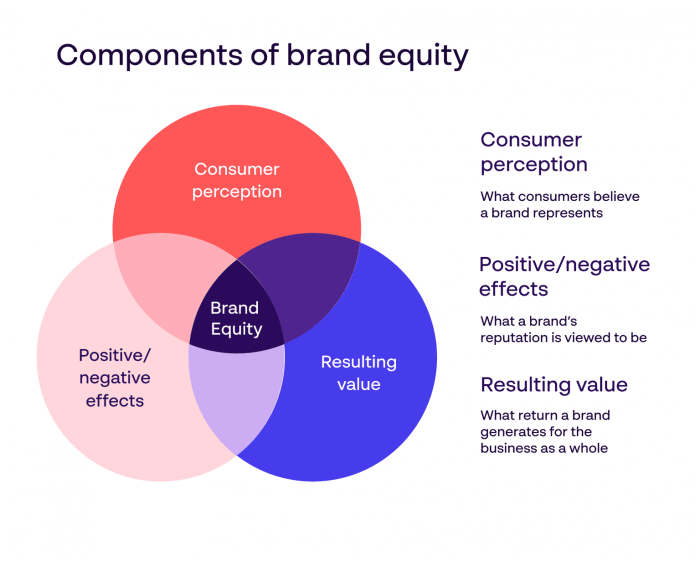
Brand equity, brand strategy, and brand management are intrinsically linked, forming a synergistic relationship where each element influences and supports the others. A strong brand doesn’t just happen; it’s the result of a well-defined strategy meticulously executed through effective management. Understanding their interrelation is crucial for building and sustaining a successful brand in the long term.Brand equity is the culmination of consumer perceptions and feelings about a brand, translating into a tangible financial value.
Brand strategy provides the roadmap to achieve desired brand equity, outlining the target audience, brand positioning, and marketing activities. Brand management is the operational arm that executes the strategy, ensuring consistent messaging, quality, and customer experience.
The Interconnectedness of Brand Equity, Brand Strategy, and Brand Management
Imagine a three-legged stool. Each leg represents one of the three concepts: brand equity, brand strategy, and brand management. Brand equity is the stool itself – the stable structure that results from the support of the other two legs. Brand strategy is the design and planning of the stool – it determines the height, shape, and stability of the final product.
Brand management is the construction process – the careful assembly and ongoing maintenance that ensures the stool remains functional and sturdy. If one leg is weak or missing (for example, a poorly defined strategy or inconsistent brand management), the entire structure (brand equity) becomes unstable and vulnerable.Effective brand management directly contributes to the building and maintenance of strong brand equity by ensuring consistent brand messaging across all platforms.
This includes consistent product quality, excellent customer service, and targeted marketing campaigns that reinforce the brand’s core values and promise. For instance, a company with a strong brand strategy might focus on sustainable practices. Effective brand management would then ensure that all aspects of the business, from sourcing materials to packaging, reflect this commitment, reinforcing the brand’s image and building trust with environmentally conscious consumers.
Conversely, inconsistent messaging or poor quality control would undermine the brand’s reputation and erode its equity. A company failing to maintain its brand promise (e.g., delivering subpar products despite marketing claims of high quality) risks a significant decline in brand equity. This decline can manifest as decreased sales, loss of market share, and a damaged reputation that is difficult to repair.
Future Trends in Brand Equity
The landscape of brand equity is undergoing a rapid transformation, driven by technological advancements, evolving consumer behavior, and a heightened focus on social responsibility. Understanding these shifts is crucial for businesses aiming to build and maintain strong brand equity in the increasingly complex modern marketplace. This section explores key emerging trends and challenges, examining how they are reshaping brand equity strategies and management.The interplay between digital marketing, social media, and sustainability is significantly impacting how brands are perceived and valued.
These factors are not isolated; they are interconnected and influence each other, creating a dynamic environment where brands must adapt to stay relevant and competitive.
The Influence of Digital Marketing and Social Media
Digital marketing and social media have fundamentally altered the brand-consumer relationship. Consumers are more empowered than ever before, readily sharing their experiences and opinions online. This has led to a greater emphasis on authentic brand storytelling, transparent communication, and building strong communities around brands. Successful brands are leveraging data analytics to personalize their marketing efforts, creating targeted campaigns that resonate with specific consumer segments.
Conversely, negative online reviews or social media crises can severely damage brand equity, highlighting the importance of proactive reputation management. For example, a company’s swift and empathetic response to a negative social media post can often mitigate the damage and even strengthen brand loyalty. Conversely, a slow or inadequate response can amplify the negative impact, potentially leading to a significant loss in brand equity.
The Growing Importance of Sustainability
Sustainability is no longer a niche concern; it is a core component of brand equity for many consumers. Consumers, particularly younger generations, are increasingly demanding transparency and accountability from brands regarding their environmental and social impact. Brands that demonstrate a genuine commitment to sustainability—through ethical sourcing, reduced carbon footprints, and fair labor practices—are rewarded with enhanced brand loyalty and positive brand perception.
Companies like Patagonia, known for their commitment to environmental activism and sustainable practices, have cultivated strong brand equity based on these values. Conversely, brands perceived as environmentally irresponsible or ethically questionable face significant reputational risks.
The Role of Technology in Shaping Future Brand Equity
Technology is playing an increasingly pivotal role in shaping brand equity. Artificial intelligence (AI) is being used to personalize customer experiences, analyze consumer behavior, and optimize marketing campaigns. The rise of the metaverse and virtual reality (VR) presents new opportunities for brands to create immersive brand experiences and engage with consumers in innovative ways. Blockchain technology offers potential solutions for enhancing brand transparency and trust, particularly in areas such as supply chain management and product authenticity.
For instance, luxury brands are exploring blockchain to verify the authenticity of their products and combat counterfeiting, thus enhancing consumer trust and brand equity. The integration of these technologies requires a strategic approach, balancing the potential benefits with the risks associated with data privacy and ethical considerations.
Ultimately, building and maintaining strong brand equity requires a comprehensive and strategic approach. By understanding the core components of brand equity, employing effective measurement methods, and adapting to evolving market trends, businesses can cultivate lasting value and achieve long-term success. The case studies presented provide valuable insights into best practices and demonstrate the tangible benefits of a well-defined brand equity strategy.
Commonly Asked Questions
What is the difference between brand awareness and brand loyalty?
Brand awareness refers to consumer recognition of a brand, while brand loyalty signifies a consistent preference for and repeat purchase of a specific brand’s products or services.
How can negative publicity impact brand equity?
Negative publicity can severely damage brand equity by eroding consumer trust, impacting perceptions of quality, and leading to decreased sales and market share.
What role does social media play in building brand equity?
Social media provides a powerful platform for engaging consumers, building brand communities, and fostering positive brand associations, ultimately enhancing brand equity.
Can a brand recover from a major brand equity crisis?
Yes, but it requires a swift, decisive, and transparent response, often involving addressing the root cause of the crisis, engaging with stakeholders, and implementing effective remedial strategies.


